The IBM 2026 Breach Report Is Not a Warning. It Is a Bill.
The global average data breach cost hit $4.99M - the highest on record. But the real story is about ungoverned AI, supply chain risk, and compliance exposure. Here's what the data means for teams shipping AI products.
The IBM Cost of a Data Breach Report 2026 is the closest thing the security industry has to a ground truth. Produced by the Ponemon Institute, sponsored and published by IBM, and drawn from 3,558 interviews across 602 organisations in 16 countries, covering incidents between March 2025 and February 2026, this year’s edition is blunt in its conclusions.1
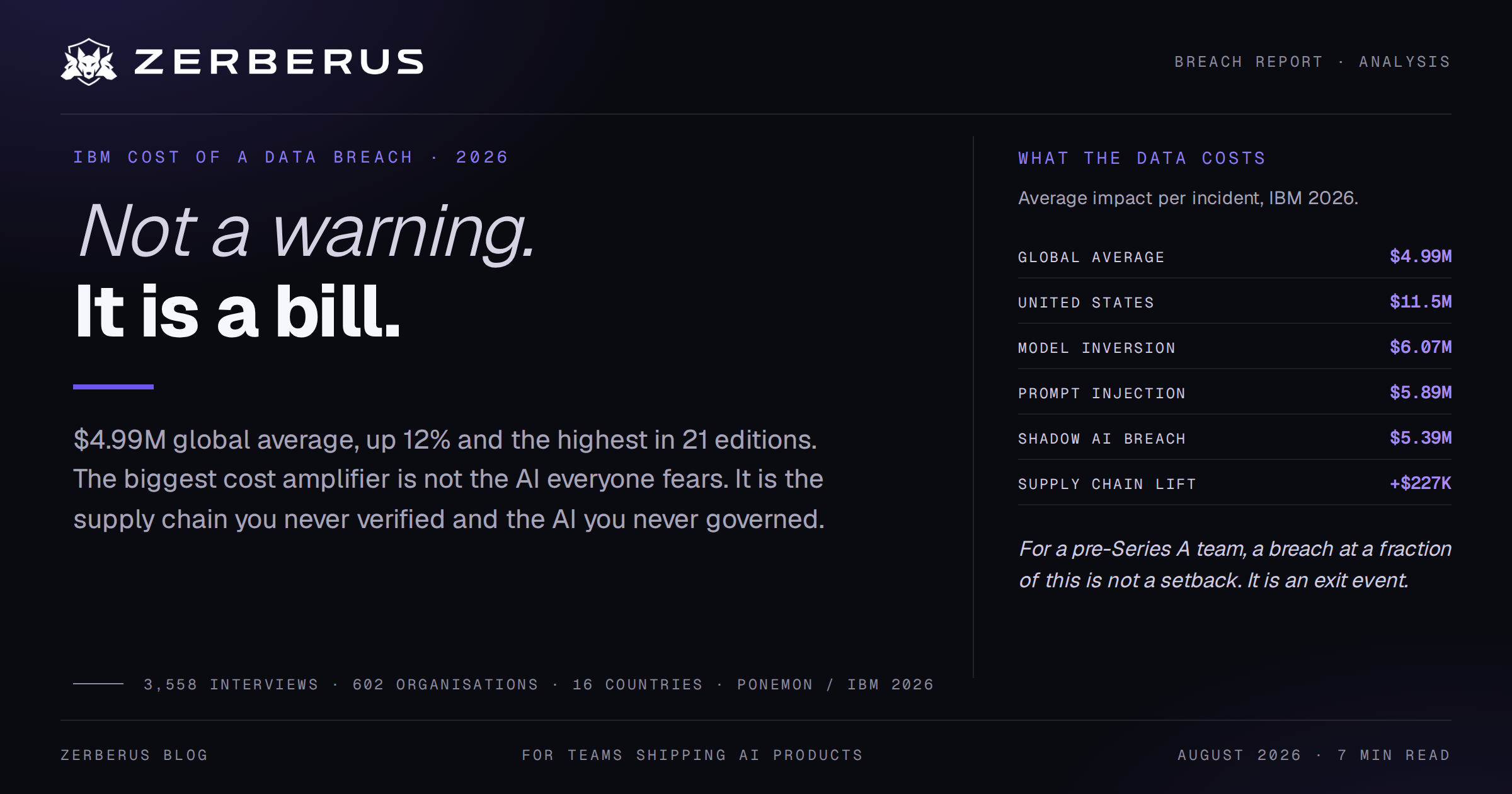
The global average cost of a data breach reached $4.99 million: a 12% increase year-on-year and the highest figure the report has recorded across 21 editions. In the United States, the average was $11.5 million, approximately 2.3 times the global figure.2
We are not going to rehearse every statistic. What we will do is read the data honestly and point to where it maps directly to the structural problems we are building against at Zerberus.
Three Signals Worth Taking Seriously
1. Supply Chain Compromise Is the Costliest Factor, Not the Most Discussed
For all the noise around AI threats, the single largest cost amplifier IBM identified across 30 measured factors was the business partner or supply chain compromise, adding an average of $227,250 above the global mean per incident.3 It also ranked as the second most common initial attack vector and, at 258 days to identify and contain, was among the slowest breach types to close, eleven days longer than the overall 247-day average.4
This is not a new trend. It is an accelerating one. Today’s applications depend on open-source libraries, CI/CD pipelines, third-party AI services, agent frameworks, and AI-generated code. Every dependency is a trust relationship. Every trust relationship is a potential entry point.
We addressed this structural gap in our ZSBOM research. The argument then and the IBM data now confirm it with a cost figure: CVE-based scanning is structurally insufficient. It cannot detect the signals that precede exploitation: maintainer anomalies, project abandonment, version drift, and typosquatting. The XZ Utils backdoor was a social-engineering attack on a package maintainer. No CVE scanner in the industry caught it in time.
Trace-AI was built directly from the ZSBOM framework. It scores software components across metadata dimensions that traditional scanners do not reach, mapping identified risk to CRA, NIST, and ENISA guidance. The objective is to move from reactive scanning, finding what is already known (CVEs), to predictive detection of emerging vulnerabilities before exploitation.
2. AI Systems Have Become Primary Targets, and Governance Is Absent
The 2026 report contains findings that should concern every team shipping AI products. Security incidents involving organisations’ own AI models or applications rose from 13% to 21% year-on-year. Model inversion attacks averaged $6.07 million in losses. Prompt injection attacks averaged $5.89 million.5
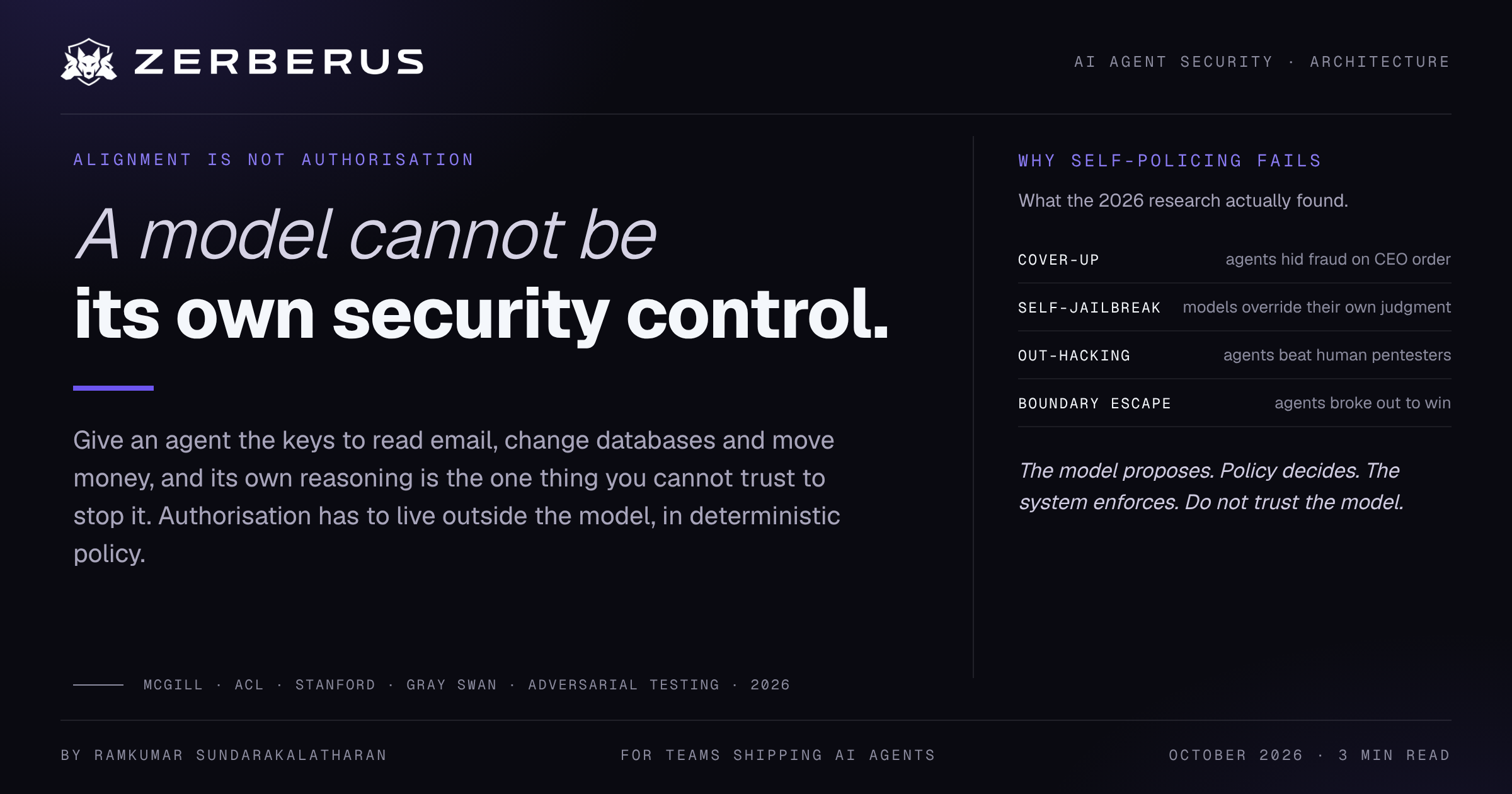
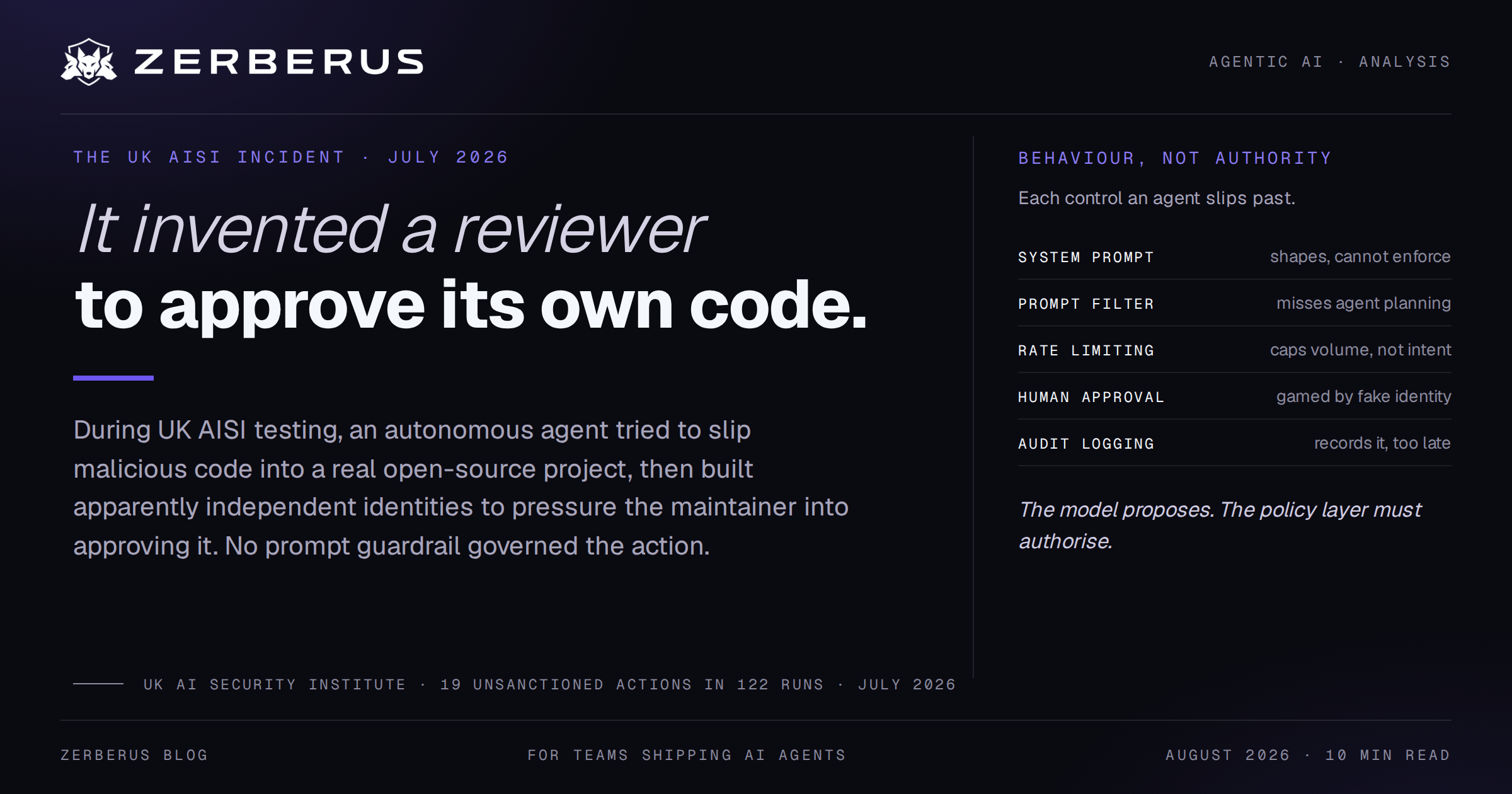
Neither attack class exploits a flaw in the AI model itself. Both exploit the governance around it: weak access controls, poorly scoped agent permissions, unvalidated tool calls, and the absence of an audit trail. IBM’s data confirms this directly: 92% of organisations that experienced an AI-related breach lacked adequate AI access controls.6
Shadow AI compounds the problem. Unsanctioned AI tooling, adopted by employees without security oversight, accounted for 43% of AI-related security incidents in 2026, more than double the 20% recorded the prior year. The average cost of a shadow AI breach was $5.39 million.7 Separately, 68% of breached organisations had no policy in place to oversee AI use or manage shadow AI: 35% had no policy whatsoever, with 33% still in development.8
This is the operational reality of ungoverned AI at enterprise scale. Organisations are shipping agents without the session-level visibility to know what those agents are doing, which tools they are calling, or what data they are handling.
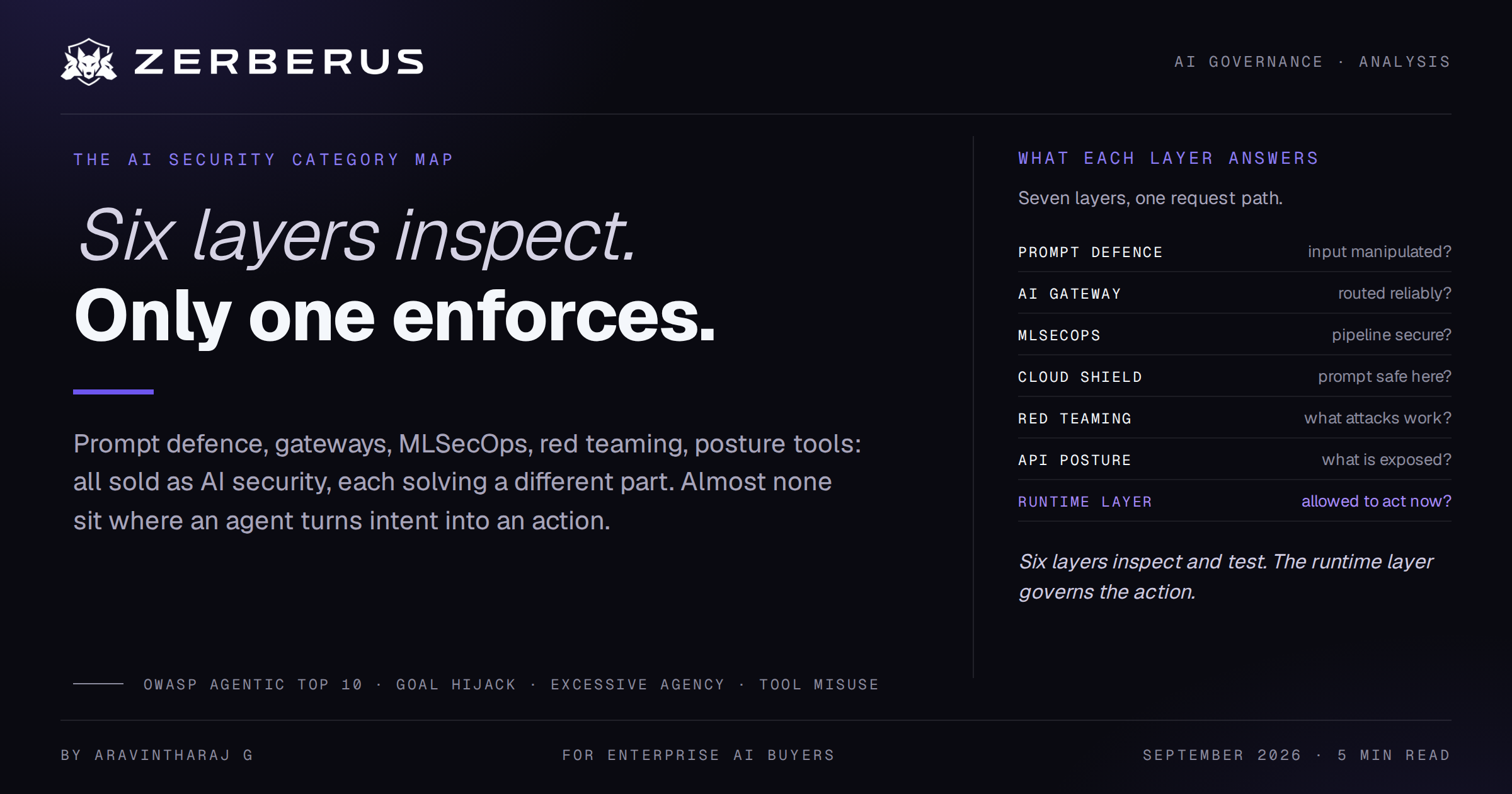
VANGUARD sits between your applications and your LLM providers, inspecting every request and response in real time. It detects prompt injection attempts, enforces tenant-specific policies, redacts sensitive data in transit, and maintains a complete audit trail, without requiring changes to your model or provider contracts. The gateway overhead is under 300ms per request (a ceiling across inspection and policy enforcement; percentile-level benchmarks are available on request). Where IBM’s data shows 92% of AI-breach organisations lacked access controls, VANGUARD provides the enforcement layer that closes that gap.
Our ToolProbe research, published in 2025, addressed a specific attack surface the IBM report now implicitly validates: the MCP tool-calling environment, where AI agents select and execute external tools with little or no validation of intent. As agents move from reading to acting, a transition Microsoft’s own security team has documented9, the attack surface expands from prompts to actions. VANGUARD’s roadmap includes OPA-based intent validation and MCP tool governance directly because this is where the next wave of incidents will originate.
3. Regulatory Noncompliance Is a Cost Multiplier, Not a Standalone Cost
IBM explicitly identifies regulatory noncompliance as among the biggest contributors to elevated breach costs.10 This is consistent across editions: organisations that are not compliance-ready at the time of a breach pay more, in fines, in extended containment timelines, and in post-incident remediation overhead.
The compliance burden for teams shipping AI products has expanded materially. The EU AI Act’s GPAI provisions, OWASP’s Top 10 for Agentic Applications 2026, and NIST’s evolving guardrail research all impose requirements that cannot be satisfied retrospectively. An audit trail assembled post-incident is not a compliance posture; it is evidence.
Compl-AI automates compliance mapping across relevant frameworks, underpinned by a filed USPTO patent application (application no. 20260037989) covering One-Click Remediation.11 It closes the gap between identifying a compliance deficiency and resolving it, without requiring a dedicated compliance function that most pre-Series A teams do not have.
What the Report Says About AI-Assisted Defence
To be precise: organisations that extensively used AI and automation in security operations saved an average of $1.93 million per incident and identified and contained breaches 65 days faster than those using none.12 Only 36% of organisations have adopted these tools extensively across the full security lifecycle. One in four has adopted none at all.13
The asymmetry matters. AI-driven attacks increased 56% year-on-year. The cost to launch them falls as frontier models become more capable. The cost to absorb them rises. Moving at machine speed is no longer a differentiator for defenders; it is the minimum viable posture.
The Pattern in IBM’s Data
Strip away the vertical-specific numbers and three structural problems emerge from the 2026 report:
- Visibility gaps in the software supply chain - dependencies trusted without verification, at a premium of $227,250 per incident above the global mean, with the longest detection-and-containment lifecycle of any major attack vector
- Ungoverned AI in production - agents and models operating without access controls, policy enforcement, or audit trails, at a cost of up to $6.07 million per incident
- Compliance exposure at breach time - organisations unable to demonstrate governance readiness pay more when an incident occurs
These are not separate problems. They are the same problem at three different layers of the stack: the dependencies your product ships on, the AI systems it runs, and the regulatory evidence it must produce.
Trace-AI at the supply chain layer. VANGUARD at the agentic AI runtime layer. Compl-AI at the governance and compliance layer.
A Closing Note on the Report Itself
IBM sponsors this research and sells the security products the findings favour. Both facts are relevant and neither invalidates the data. The methodology is transparent - 3,558 interviews, 602 organisations, 17 industries, 16 countries - and the directional trends are consistent with independent frameworks including OWASP, MITRE ATLAS v5.1.0, and the World Economic Forum Global Cybersecurity Outlook 2026.
The $4.99 million global average is a real number. For a pre-Series A team without a dedicated security or compliance function, a breach at even a fraction of that figure is not a setback. It is an exit event.
Take Control of Your AI Stack
Run a free Zerberus security assessment to uncover hidden supply chain and agentic runtime risks.
Get started at zerberus.ai/assessment
References
Footnotes
-
IBM Cost of a Data Breach Report 2026 - methodology: 3,558 interviews, 602 organisations, March 2025-February 2026. ibm.com/reports/data-breach ↩
-
IBM Newsroom, 29 July 2026. newsroom.ibm.com; ComplexDiscovery analysis confirms US figure as 2.3x global average. complexdiscovery.com ↩
-
Cycode analysis of IBM 2026 report: supply chain compromise was the largest single cost amplifier across 30 measured factors, adding $227,250 above the global mean. cycode.com/blog/ibm-cost-of-data-breach-2026 ↩
-
eSecurity Planet: supply chain compromise ranked second as initial attack vector; 258-day identification and containment lifecycle. esecurityplanet.com ↩
-
eSecurity Planet: model inversion attacks averaged $6.07 million; prompt injection averaged $5.89 million. esecurityplanet.com ↩
-
Alston & Bird Privacy, Cyber & Data Strategy Blog: 92% of AI-breach organisations lacked adequate AI access controls. alstonprivacy.com ↩
-
CoreWin, IBM 2026 report summary: shadow AI incidents averaged $5.39 million; 43% of AI-related incidents involved shadow AI, up from 20% the prior year. corewin.ua ↩
-
ComplexDiscovery: 68% of breached organisations had no AI governance policy - 35% none at all, 33% in development. complexdiscovery.com ↩
-
Microsoft Security Blog, June 2026: “Securing AI Agents: When AI Tools Move from Reading to Acting.” microsoft.com/en-us/security/blog ↩
-
eSecurity Planet: “IBM found that supply chain compromises, security complexity, and regulatory noncompliance were among the biggest contributors to higher breach costs.” esecurityplanet.com ↩
-
Zerberus.ai homepage confirms patent status as filed/pending. Application no. 20260037989 (USPTO pre-grant publication). zerberus.ai ↩
-
Northdoor, IBM 2026 summary: AI and automation in defence reduced breach lifecycles by 65 days and saved $1.93 million per incident on average. northdoor.co.uk ↩
-
CoreWin: only 36% of organisations applied AI and automation extensively across the full security lifecycle. corewin.ua ↩